

TANMAYA SHEKHAR: REWRITING INDEPENDENT CINEMA
by Vinta Nanda August 23 2026, 12:00 am Estimated Reading Time: 8 mins, 28 secsIn this exclusive conversation, Vinta Nanda speaks with Tanmaya Shekhar about Nukkad Naatak, a fearless caravan journey across India, grassroots audiences, Instagram storytelling, and the remarkable road from independent cinema to Netflix.
There are filmmakers who make films, and then there are filmmakers who create movements around them.
At a time when independent cinema in India is often trapped between festival applause and the impossibility of theatrical distribution, Tanmaya Shekhar chose an entirely different road—quite literally. With his actor, collaborator and co-producer Molshri, he transformed the release of Nukkad Naatak into a six-week journey across India in a hand-painted caravan, meeting audiences, performing street theatre, singing songs from the film, documenting every moment, and building a community before asking anyone to buy a ticket.
The gamble worked. What began as a personal film about educational inequality eventually found its way to Netflix, not because a studio manufactured its buzz, but because its creators refused to surrender to the conventional rules of filmmaking.
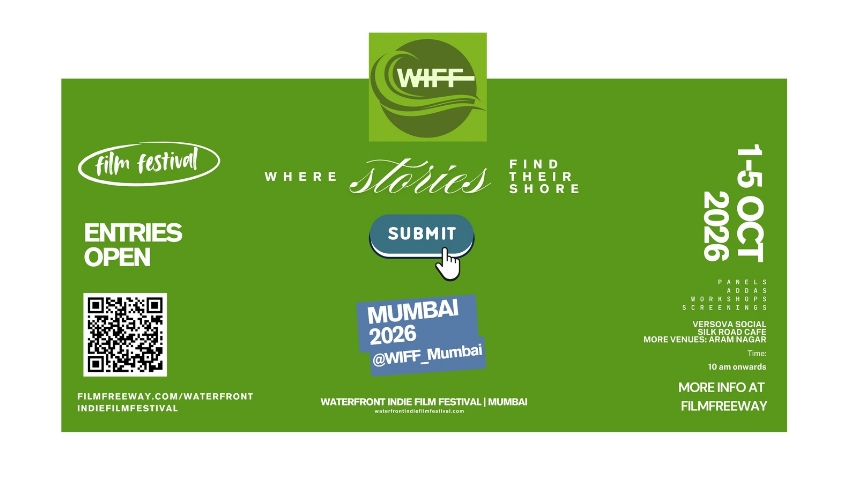
When I first encountered Nukkad Naatak at the Waterfront Indie Film Festival Mumbai, I sensed a rare conviction behind its making. Months later, watching Tanmaya's remarkable campaign unfold on social media, it became clear that his greatest achievement wasn't merely completing an independent film—it was reinventing how one reaches an audience.
This conversation is about courage, persistence and a generation determined to change Indian cinema.
When There Is No Roadmap, Build One
I ask Tanmaya the obvious question: How does someone even arrive at the idea of driving a film across India? He laughs before admitting there was never a master plan. “When you don't know the roadmap, you take detours. We tried festivals, we tried existing routes, but we realised independent films don't always have access to the people who can take them forward.”
After completing Nukkad Naatak, the team found themselves in the familiar limbo of independent filmmakers. The prestigious festivals had given them audiences and appreciation, but not necessarily business opportunities. They weren't at Cannes or Sundance; they were at festivals where conversations flourished, yet distribution remained elusive.
The turning point arrived unexpectedly during the closing night of WIFF. There they discovered the extraordinary journey of another independent film, Aranya Sahay’s Humans in the Loop, and realised that unconventional success was possible. If someone else could create their own path to Netflix, why couldn't they?
That single question became the beginning of an entirely new strategy.
The Caravan That Became A Film Campaign
Instead of spending lakhs on publicity, Tanmaya decided to spend something far more valuable—effort. The team began studying their own Instagram analytics. Which cities were already watching their content? Where were young people engaging with Molshri's performances? Rather than buying audiences, they decided to meet the audience they already had.
The idea evolved into something audacious: rent a caravan, paint it with the film's artwork, assemble a tiny travelling crew, and drive from Mumbai to Kolkata. For nearly two months they planned every detail.
The caravan itself became a moving poster. Designers hand-painted its exterior with Nukkad Naatak branding. Two crew members documented the journey, two coordinated events, while Tanmaya and Molshri became both filmmakers and travelling performers.
Their route crossed Ahmedabad, Vadodara, Bhopal, Indore, Kota, Jaipur, Delhi, Kanpur, Dhanbad and finally Kolkata—covering somewhere between 15,000 and 20,000 kilometres over forty-five unforgettable days.
It wasn't merely marketing. It became living cinema.
Creating News Instead Of Buying Publicity
One of the most revealing moments in our conversation is Tanmaya's understanding of media. He wasn't trying to manipulate publicity; he was trying to become worthy of it. “Even if you spend money on PR, the story itself has to be interesting. We kept asking ourselves—how do we create something newspapers genuinely want to cover?”
His answer was beautifully simple. Create an event so authentic that journalists, students and local communities become curious on their own. Instead of distributing press releases, they distributed experiences. They performed street plays, sang songs from the film, interacted with colleges and neighbourhoods, and invited people into the emotional universe of Nukkad Naatak without revealing the film itself.
Remarkably, they chose not to screen the film across cities. That restraint was deliberate.
The road trip wasn't meant to replace theatres—it was meant to make audiences want to enter one. Outside of a special screening in the Dhanbad settlement where much of the film was shot, the caravan carried stories, conversations and performances rather than the finished film.
It's a lesson many marketers could learn: anticipation is often more powerful than access.
A Story Born Between An IIT And A Basti
The extraordinary campaign often overshadows the equally powerful origin of the film itself. Tanmaya's childhood was spent inside the intellectually privileged ecosystem of IIT Kanpur, where his father taught engineering and eventually became Director. Numbers, analysis and academic excellence surrounded him. By every conventional measure, he belonged to one of India's most elite educational worlds.
Just a few kilometres away lived another India.
His mother volunteered in a nearby basti, teaching children in an improvised community school housed beneath a simple shed. During the COVID years, after both his father and grandmother survived terrifying ICU hospitalisations, Tanmaya returned home from the US where he was studying, and spent months observing their lives with fresh eyes.
The contrast became impossible to ignore. “My father was Director of an IIT. A few kilometres away, children were struggling for primary education. Both my parents are educators. I felt deeply connected to that story.”
That emotional contradiction became Nukkad Naatak. It wasn't conceived as an issue-based film first; it emerged from the intimate geography of one family's life, where privilege and deprivation existed within walking distance of each other.
The film's politics, therefore, feels profoundly human rather than ideological.
From Engineer To Filmmaker
The transition from engineering to cinema wasn't dramatic—it was gradual rebellion.
Although Tanmaya entered IIT, he confesses with disarming honesty that he was never its brightest student. He eventually shifted from engineering to economics, much to his father's frustration. Yet the larger transformation happened later, while living in New York. There he discovered something that India had rarely offered him: the legitimacy of artistic ambition.
He watched documentaries playing to full theatres, met young sculptors, musicians and filmmakers who pursued creative careers without apology, and realised that cinema could be more than entertainment—it could be a way of living. The courage to leave a secure profession wasn't born overnight.
It accumulated through exposure, observation and the growing certainty that stories mattered more to him than stability.

Funding A Dream, One Conversation At A Time
Independent filmmaking is often romanticised. Raising money rarely is. For Nukkad Naatak, Tanmaya returned to the community that had shaped him—his IIT network.
He reached out to over 500 seniors, friends and alumni. A small group believed enough to contribute modest investments, allowing the film to be made over roughly twenty-four shooting days. The fundraising didn't end with production; it continued through editing, music, festivals and eventually marketing.
What touched me most was his sense of responsibility. He still considers those contributions loans of trust. The dream now extends beyond Netflix: completing a documentary about the caravan journey and eventually returning every investor's faith with tangible success.
Molshri: More Than A Collaborator
Watching Tanmaya and Molshri's Instagram series, one senses an effortless chemistry. I wondered whether acting had always interested him.
His answer reveals something deeper. Their partnership was never built on celebrity; it was built on shared struggle.
After collaborating on their earlier short film Scenes from a Pandemic, they spent years navigating festivals, promoting work themselves and confronting the same invisible barriers. Molshri sought acting breakthroughs; Tanmaya sought directing opportunities. Rather than competing, they aligned their ambitions around one belief: if the film succeeds, both artists move forward.
It's an unusually egalitarian creative relationship, where authorship becomes collaborative without losing individual identity.
Watch The Full Interview On YouTube:
The Generation That Refuses To Give Up
Perhaps the most revealing part of our conversation comes when we discuss the studio system. Tanmaya has just completed writing an ambitious new love story spanning decades. Unlike Nukkad Naatak, he hopes this film will travel through mainstream studios. Yet he remains clear that he doesn't aspire to become a filmmaker-for-hire.
He wants to be recognised because of his voice—not because of the stars attached to it.
He speaks of conforming to the system while simultaneously believing that distinctive directors eventually earn the freedom to be themselves. Christopher Nolan becomes one reference; Indian auteurs another. The rebellion, he suggests, is not refusing the system altogether but changing it from within through persistence.
Earlier in the conversation, he mentions the lesson that has stayed with him from an independent documentary filmmaker in New York: “I'm not the most talented person. My greatest strength is that I don't give up.”
Those words explain the caravan better than any marketing strategy ever could.
Why Nukkad Naatak Matters
As our interview concludes, I find myself reflecting less on Netflix and more on what Tanmaya represents. His generation is incredibly unwilling to wait for permission. They write, direct, edit, perform, market, analyse algorithms, build communities and drive thousands of kilometres if necessary. They understand technology instinctively, but they never allow technology to replace storytelling. They believe individuality isn't an indulgence—it's the very currency of meaningful cinema.
Nukkad Naatak is an important film because it speaks about education, class and access with uncommon tenderness. But its journey may prove even more influential than its narrative. It offers a blueprint for independent filmmakers across India: that audiences are not abstract markets waiting to be purchased—they are communities waiting to be met.
Some films arrive in theatres. Others arrive on roads, in colleges, in bastis, through songs, conversations and shared miles.
Tanmaya Shekhar's brilliant journey tells me that sometimes the bravest thing a filmmaker can do is simply refuse to stop travelling until the story finds its people.



-173X130.jpg)
-173X130.jpg)
-173X130.jpg)


-173X130.jpg)
-173X130.jpg)