
-853X543.jpg)
MAGDALEN OF THE CANADIAN ARCHIPELAGO
by Sohaila Kapur July 17 2026, 12:00 am Estimated Reading Time: 16 mins, 28 secsSohaila Kapur chronicles an unforgettable journey through Canada’s Magdalen Islands, exploring Acadian history, breathtaking landscapes, remarkable local culture, coastal ecology, exceptional cuisine, and personal travel experiences across this enchanting North Atlantic archipelago.
Last month, my son had his birthday plus his graduation convocation, which called for a double celebration. We both decided to take a little break, off the beaten track. We were in Ottawa and decided to explore rural Canada. He is a researcher, with a blog of his own, so of course he dived into his laptop immediately and came up with a unique suggestion. The Magdalen Islands. It reminded me of Mary Magdalene, one of Jesus’ chosen followers and read that most of the Islanders were devoted Catholics. The photos of the Islands reflected a serene beauty. We decided to visit this Magdalen.
The islands are an archipelago, in the Gulf of St. Lawrence, where the St. Lawrence River meets the Atlantic Ocean. They are the jagged remains of a vanished part of the mainland, approximately 205 sq kilometres in area and are administered by Quebec, a French speaking province of Canada.
18.jpg)
History
A bit about the history of the Islands. They traditionally belonged to the Indigenous inhabitants of Atlantic Canada, the Mi’kmaq Nation, who stayed seasonally to fish and hunt for walrus.
The French speaking Acadians settled there in the 18th century, after the conquering. The British deported them en masse from the Canadian province of Nova Scotia, during the Great Expulsion, beginning around 1760. Twenty -two expelled families arrived here and made the Magdalen Islands their home. The Islands are still sparsely inhabited. There are about 13,000 residents, a majority of them Acadian. Only 5 percent are people of Scottish or English descent, who tend to be concentrated in the northern part of the Islands. The area came under Quebec’s administration in 1774.
Adventure!
We drove 342 kms—across the amazing 12 km long Confederation Bridge which took 15 minutes to cross at the speed limit -- to reach Prince Edward Island. While driving through it, my son informed me that the 1985 hit TV series, Anne Of Green Gables was based there.
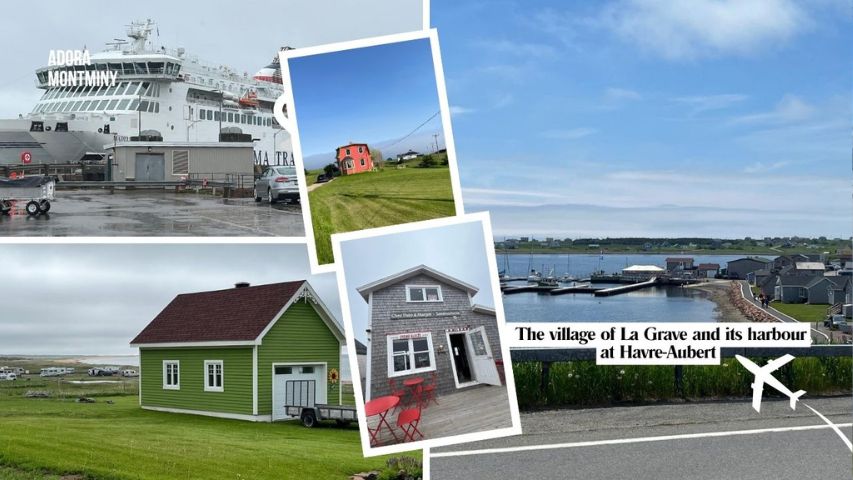
We were to catch a ferry from Prince Edward Island, since the Magdalen Islands are not reachable by road. The big ferry, the M/V Madeleine, operated by the CTMA, a maritime transportation company, can carry 750 passengers and 400 vehicles. We were driven aboard.
The ferry was like a floating hotel. The onboard facilities included a restaurant, a bar, lounging areas, exterior observation decks and designated areas for pets. It was raining heavily when we left. The sea heaved and splashed the deck and the faint hearted retreated indoors, to enjoy the in-house entertainment.
The Islands!
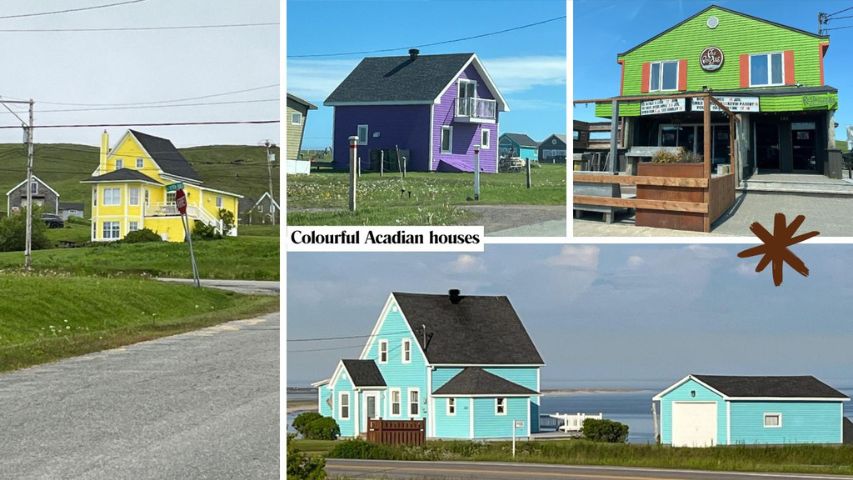
Five hours later, we docked at Cap-aux-Meules port. From there we took route 199 and drove 25 kilometres to the strip’s southern end, the Havre-Aubert Island. Route 199 is the only road joining the Islands. An asphalt ribbon, it is flanked by the sea, sand dunes and the occasional green hillock. En route we saw gaily painted houses dotting the landscape. Colourful houses are an Acadian tradition.
We also spotted three different flags fluttering on the tops of houses. One was the blue, white and red Acadian flag, with a yellow or golden star in the upper corner. The colours represent the Acadians’ ancestral ties to France, while the star, known as Stella Maris or the Star of the Sea, is the symbol of the Virgin Mary and represents the community’s Catholic faith and sea faring heritage. The second was the blue and white flag of Quebec and the third was the national, maple-leafed Canadian flag, fluttering atop homes of the English. One country, three loyalties!
A group of seven islands makes up the Archipelago. We decided to visit five.
We were booked at Mari-Jo Luxury Chalets, near Dune du Sandy Hook beach, at Havre-Aubert. Although called a chalet, ours was probably the smallest house out of a series of grey cottages dotting the area. Our lodgings, number 6, were clean and comfortable and could just about accommodate two people.
We were thankful for our inflatable mattress though, which we had brought along. The kitchenette-cum-dining-cum-living area was turned into an extra bedroom at night, for us.
We had all the amenities and could cook our own food (although one had to buy groceries in the local market). The best part was that one could sit on the tiny patio on a sunny day, dream, read and watch the sea. And at night, the full moon glimmered in the water, giving it an other-worldly effect. I had the privilege of watching a huge blood moon rise late one evening. The water below turned deep pink and an optical illusion made it look as though the sea was rising to meet the sky! I held my breath at the surreal vision.
First day
Magdalen Islands is a foodie’s paradise and the people are friendly and helpful. Everything is more or less home-made. Whether it’s honey, cheese, wine, beer, veggies or sea food, it’s incredibly fresh. Many residents run small farms or businesses producing these. The grocery stores are local and small. None of the big food chains exist here.
On our first day, we decided to try the popular micro-brewery, that produced its own beer. À l'abri de la Tempête (translated as `sheltered from the storm’) is popular with tourists. Located at d'Étang-du-Nord, on Cap-aux-Meules Island (where we had docked), the two storied building has a sea view. It is famous for using local ingredients like marine algae, sea water, and island-grown barley for their beer.
Tasting is a done thing before you order wine, beer, or cheese. I ordered five different beers. They were very light and flavourful and I wasn’t drunk at the end of it, just very happy! Since it was FIFA season, people stayed indoors to watch the game on a giant screen. It was lively and noisy. At end of the game, the hosts gave out lists for Bingo. One had to identify video songs being played on the screen to win a round. Those not interested, played their own card games.
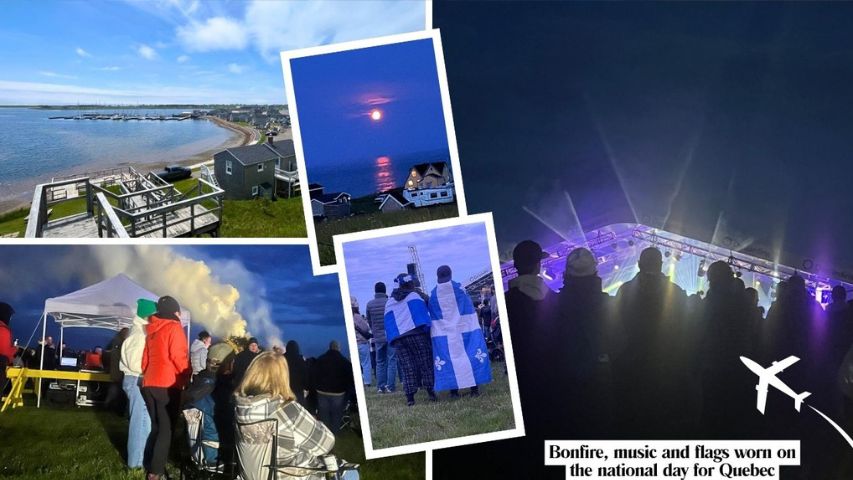
After the drink it was time for entertainment and so we drove close by to attend Saint-Jean-Baptiste Day (also known as La Fête Nationale) celebrations at the Anse-aux-Baleiniers, a popular recreational tourism and beach site located in Fatima. Interestingly, Fatima is a village that is named after Fátima in Portugal, the famous Catholic pilgrimage site where the Virgin Mary reportedly appeared in 1917. The name was chosen by the local, deeply religious, Roman Catholic Acadian population.
26.jpg)
This is a national day for Acadians and the Quebecois people. They wore the Quebec flag on their backs and in their hair, drinking, eating and listening to local acoustic and folk artistes. A huge bonfire is part of the celebrations, but it refused to light, thanks to the damp weather. We heard that it roared to life at 3 am, when most people had left! But the fireworks were enjoyable. Reminded me of Delhi’s Diwalis, before the cracker ban.
Havre-Aubert Island, where we were staying, is known as the cultural heart of the archipelago. We started our sightseeing the following day, by visiting the village of La Grave.
Downtown La Grave consists of cute, grey cottages that were once homes of the Acadians who were fisherfolk, agriculturists, crafts people and small businessmen. They are heritage buildings now and have been turned into local artisan boutiques, cafes and historical sites. Even today the economy depends on lobster fishing, a salt mine and tourism. The islands have been isolated for many decades because of the severe winter and the difficult access. That’s the reason why the local culture is perfectly preserved.
We took a walk down main street. The La Grave beach is the site of the hugely popular, annual Sand Castle Contest, where one can see the most amazing sand sculptures. We were early as summer festivities really start in August. The harbour with its anchored boats and yachts inspired us to visit the Musee de la Mer, or the maritime museum. It describes the area’s sea-faring past and featured the countless shipwrecks that have shaped its history.
We learnt about the history of the light house keepers, whose jobs were all- important because of the rough seas and the rocky coastline. Some light houses are still active but they are automated now and do not need a keeper.
It also featured the lives of the early Madelinots (inhabitants of the Islands) as well as a complete skeleton of a stranded South African sperm whale, which had lost its way and turned up on these shores, only to die!
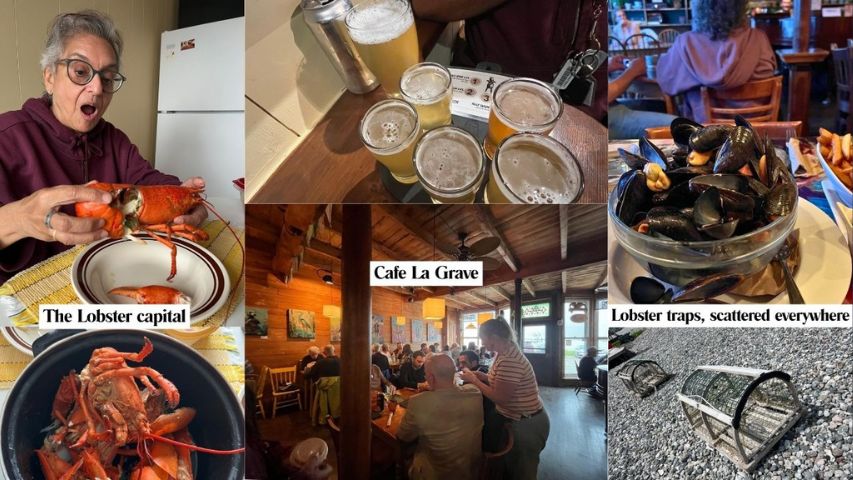
While we were in the village, we visited and lunched at the Café de La Grave. A general store since 1865, it is now an iconic high-end restaurant, serving regional cuisine. We sampled Pot-en-Pot, a delicious savoury Acadian pie, with fresh seafood and locally made cheese. It washed down wonderfully with white wine! We also ate freshly caught mussels in a soup of vegetables. The restaurant also serves smoked seal which we didn’t dare try! There was a live band of local musicians entertaining us while we ate.
21.jpg)
After lunch we hiked four kilometres to The Anse-à-la-Cabane Lighthouse (also known as Millerand Lighthouse) on the same island. It is the oldest and tallest surviving lighthouse in the Magdalen Islands. Built in 1870 by the Canadian government, it served as a guide for sailors and seal hunters navigating the Gulf of St. Lawrence. This 13-meter hexagonal wooden tower features a red lantern, located on the south side of the archipelago. This was the last light house built with a hexagonal shape.
The light house is on private property, but the site can be publicly accessed. There’s a coastal walking trail beside it, which revealed the sweeping coastline with its stunning red rocks, white cliffs and Magdalen Island’s famous sea caves that are exposed during low tide. They reminded me of Gothic novels that described such an atmosphere. And with a slow mist rising, it completed the picture for me!
I was tempted to walk closer to the jagged edges, to savour the haunting beauty of the vista, but there were warnings that the borders were weak and could crumble. The whole archipelago is steadily eroding because of climate change. As the icebergs shrink, the water’s level rises and dashes against the cliffs, weakening them. In fact, the beauty of the caves and the arches are also a cruel reminder that these are gigantic bites of the ocean and in a couple of decades, the entire coast may crumble and collapse.
I myself was on the verge of collapse now, with exhaustion. My son deposited me at the only grocery store of our island and walked back 3 kms to fetch the car and pick me up.
The next day, I took a long walk on the neighbouring Sandy Hook Beach, with its spectacular, sweeping sand dunes. I chose a rock of my own, sat on it and meditated on the sea for a while. Sandy Hook beach is expansive and is ideal for swimming, water skiing, fishing, boating, kayaking, wind surfing, running, walking, biking and camping—activities that are popular on the Islands.
18.jpg)
Of lighthouses and beaches..
The archipelago’s beaches span 300 kms. The sand is golden and there is a fringe of sea weed deposited by the sea, which one must avoid while walking. I picked some great sea shells. People camp all around these beaches, because there are clean public toilets and picnic tables available near them. I had planned to swim, but being the North Atlantic ocean, it was kind of cold. I believe it warms up to 20 degree in August, when it is the peak of summer and the beaches are crowded. We happen to visit just before the rush and were able to tour in peace.
The following day, we are back on the Cap-aux-Meules Island to visit Borgot, or the Cape Herisse lighthouse. It stands on the rugged red sandstone cliffs of the Etang-du-Nord, at the tip of Cape Herisse and has a sweeping view of the Gulf of St. Lawrence. It is considered one of the best sunset spots on the Islands.
We saw the sunset but its full magnificence was thwarted by a thin layer of dark clouds that eclipsed its sinking into the sea. Apparently, on a clear day, the sea appears to be on fire! If one is lucky, one can spot seals in the water or sunning on a rock. We spotted several black cormorants fishing and flocking on the jagged rocks.
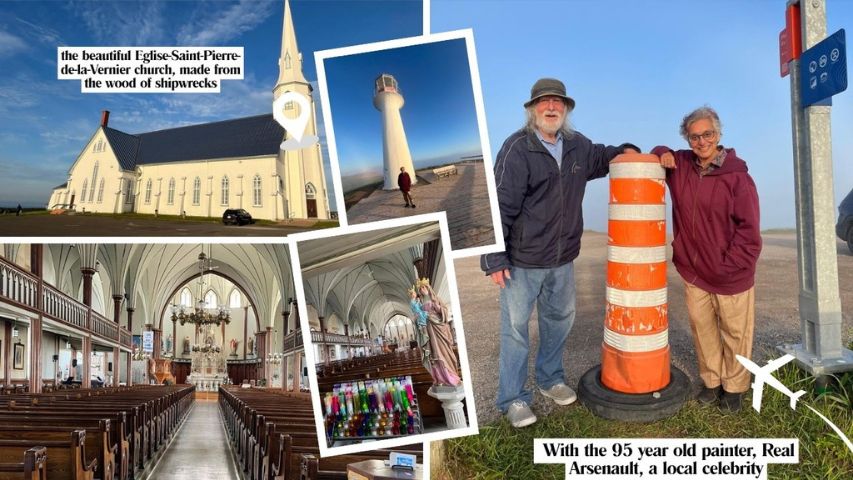
We met an interesting personality, who walked up to us to say hello. Turned out he was one of the oldest, if not ‘the oldest’ artist of the Islands. Real Arsenault is a painter who has lived on the Islands for more than 50 years. He lives alone and is very independent at 95! He told us that he was the first to paint his house a vivid colour, after which others followed. Recently, his daughter in law made a documentary on him. He had turned up to see the sunset and was glad to have met two Indians!
The Borgot lighthouse was built in the 1870s to prevent shipwrecks in the region. The first lighthouse was a two-storeyed wooden house in which the keeper and his family lived. It underwent a restoration in 1913, was demolished in 1967 and replaced by a metal tower. The present-day white plastic tower was built in 1987. The new-age brought its own construction material, manufactured instead of natural.
Next on our list that day was the Dune du Sud beach in Havre-aux-Maisons Island, which was further north. It offers 22 km of fine sand and small, private beaches nestled between rocky formations, sculpted by the waves. It is the only beach in the region with spectacular blood red sandstone cliffs and caves accessible at low tide, which we explored. Piping Plovers, once an endangered bird, have been reported in large numbers over there. Although the wind is normally whippy on the Islands, this beach is sheltered from them, making it perfect for swimming, walking and water sports. For lunch, one can have the Islands’ unique Lobster Rolls at Gampy’s, a popular food truck that overlooks this beach.
Next we visited Fromagerie du Pied-De-Vent at Havre-aux-Maisons. This is an artisanal cheese factory. Visitors are given a tour of the cheese making from the milk of Canadian cows, which are kept by them. The cheese factory produces five types of cheeses which one is allowed to taste and one is shown the process.
We were too early for the process, which starts in August. However, we did taste the cheese and bought some. We also stopped to taste the locally produced wine, made from flowers. They tasted of the Island’s diverse flora. It reminded me of the floral wines produced by Himachal Pradesh. Though the latter are stronger in alcohol content.
88.jpg)
The final day!
On our last day, we decided to visit the Grande Entrée Island. It is at the extreme north end of the Islands. En route we stopped at the stunning Église Saint-Pierre-de-la-Vernière, which is the second-largest wooden church in North America. Built in 1876 from wood salvaged from shipwrecks, this historic heritage monument serves as an active place of worship and an important cultural landmark. It has a very beautiful graveyard surrounded by nature.
We craved a Tim Horton’s coffee, and even saw one enroute. But it was closed with an announcement propped outside that it would shut down permanently in the next few weeks. It was probably not doing well as the local culture prized their own little industry over the big food chains.
The mist arose while we were driving on route 199 and something large and ghost-like appeared in our view. It turned out to be two giant windmills, lazily moving their arms. We found out that we were passing the Dune du Nord Wind Farm. The strong winds on the Islands are used to generate power through these windmills. The farm’s two, 4 megawatt turbines, supply more than 15 percent of the island’s electricity, which is the eco alternative to the regional, diesel-fuelled thermal plant.
We then entered Grosse-Ile, which has the settlement of Old Harry, that is predominantly English speaking. The houses were smaller in comparison and not so colourful. It was obvious that the Acadian settlers on the rest of the Islands were wealthier. The East Point National Wildlife Area is located on this Island, which also has several walking trails.
The mist, which had disappeared, suddenly arose again and we could hardly see beyond four feet. Something gigantic loomed up again. The mist thinned a little and we saw a giant factory. It had huge pipes that led from the building to the sea. We learnt these pipes extended for 300 metres under the lagoon towards the Grand Entrée Island. This was the Mines Seleine, the only mine in the archipelago, operated by Windsor Salt Limited. The Magdalen Islands sit on top of huge pillars of salt. The mine produces over 1.3 million metric tonnes of rock salt annually for road de-icing across Eastern Canada and the U.S.!
We then entered Grand Entrée, which is known as Québec's ‘Lobster Capital’. Originally settled in the 1870s, it features over 110 colourful fishing boats, striking red sandstone cliffs, and wild, sweeping sand beaches. Located at the end of Route 199, this is the busiest fishing port in the archipelago, bringing in over half of the islands' total annual lobster catch. The figures are a mind boggling 3 million lobsters annually!

It was 10 a.m., and we saw fishing boats chug in and anchor. They had large blue containers full of the morning catch. We watched them pick up the wet, wriggling lobsters, tag them and toss them into an empty container. There were big trucks waiting outside to transport them to the markets. Back home, our host cooked two of the lobsters from his brother-in-law’s morning catch, for just 20 dollars. On a restaurant menu they were more than twice that cost! The meat was tender and juicy. Although lobsters are the main catch, the Gulf of St. Lawrence also offers up snow crab, Atlantic mackerel and halibut, scallops and blue mussels.
There is also a nature trail at Grande Entrée, which is considered one of the best hikes in the region, offering panoramic views and sandy beaches. Nature trails with breathtaking vistas are aplenty on the Islands.
Bird Rock (Rocher-aux-Oiseaux), a steep sandstone cliff, which lies 32 kms North East of Grosse Ile and is accessible only by boat, is a protected bird sanctuary and breeding ground for thousands of sea birds. One can also take a guided boat tour of the magnificent red sandstone caves and arches, carved by the sea, in the summer. Seal spotting is also a favourite activity. I missed the sea tour this time but it is on my bucket list for the future!
We drove back to the ferry the next day, after five very intense, enjoyable and gastronomic days at the Islands!



-173X130.jpg)
-173X130.jpg)
-173X130.jpg)


