

SELF-DISCOVERY SERIES UNITES GENERATIONS WITH CINEMA
by Editorial Desk February 9 2026, 12:00 am Estimated Reading Time: 4 mins, 7 secsAt the Self Discovery series of TRIS in Delhi, Saeed Mirza and Dibakar Banerjee engage with emerging filmmakers in intergenerational dialogue, exploring social responsibility through mentorship sessions that invite audiences into meaningful cinematic conversations in collaboration with
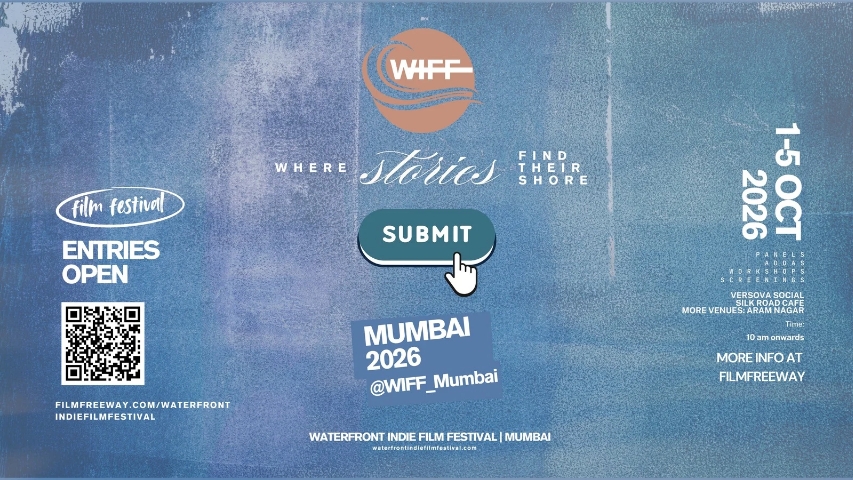
WIFF Mumbai. Vinta Nanda reports.
Listening Before Speaking: A Rare Creative Dialogue
The Self Discovery series of the Tuli Research Centre for India Studies has become a rare and vital space where art, cinema, philosophy and lived experience meet without hierarchy. The ongoing edition in Delhi proves that.
Curated under the larger framework of the Self Discovery–Rediscovering India Festival, the long and diverse programme of exhibitions, lectures, film screenings, conversations and mentorship sessions is designed not merely as a cultural calendar, but as a living laboratory of ideas where generations meet and meaning evolves.
At the heart of this expansive series lies a compelling intergenerational dialogue between veteran filmmakers and emerging voices in collaboration with the Waterfront Indie Film Festival Mumbai. Two of Indian cinema’s most distinctive auteurs, Saeed Akhtar Mirza and Dibakar Banerjee, are engaging directly with young filmmakers in a series of mentorship sessions that promise not lectures, but conversations. The emphasis is clear: listening, learning and rediscovering the creative self across age and experience.
Saeed Mirza and the Art of Listening
Saeed Mirza, whose cinema has long explored the social conscience of India, expresses his approach with characteristic humility and curiosity. “I want to listen to the young filmmakers and not impose myself upon them, so I’m looking forward to the session with them,” he says of his interaction with emerging filmmakers at the festival. “It’s important to know their thoughts; for me, it’s not important to hear myself speaking.”
Mirza will mentor and interact with Sivaranjini, Divya Kharnare, Kabeer Khurana, Vidar Joshi, Simar Singh and Jalpan Nanavati—young filmmakers whose work reflects the diverse anxieties, aspirations and aesthetics of a new generation. Their dialogue unfolds within the broader thematic question: Is there any significant space for social responsibility within the creative artistic spirit? The question is as urgent as it is timeless, probing how young artists navigate identity, material independence and creative integrity in contemporary India.
This mentorship session—Mentorship Q&A Part I—will take place on Monday, 9 February 2026, from 3:30 pm to 5:00 pm at the M.L. Bhartia Auditorium, Alliance Française de Delhi.
He is also delivering the Khwaja Ahmad Abbas Memorial Trust Lecture, where he told me he will be speaking on Abbas and reflecting on his ideology in the context of what is unfolding in the world today—revisiting a legacy that placed humanism, political consciousness and social justice at the centre of storytelling.
Neville Tuli’s Vision of Intergenerational Exchange
Neville Tuli, whose vision anchors the festival, speaks of the deeper intention behind bringing together the young and the seasoned. “I stopped expecting years ago,” he says, with a reflective pause, “though the theoretical hope is always that an intergenerational instinctive link pops up that allows voices which would not usually dialogue, let alone with respect, but now suddenly start talking with joy, humour and respect as if age and time does not intrude or obstruct.”
For him, the goal is A Living Continuum: “For history to become a daily living contemporary unlimited force of joy and adding a wiser sense of being oneself.”
Through exhibitions on modern Indian art, archival cinema material, lectures and conversations, the festival transforms history and creativity into a shared contemporary experience.

Dibakar Banerjee and New Possibilities
Dibakar Banerjee, whose cinema has continually pushed formal and thematic boundaries, echoes Mirza’s openness to learning from the young. Speaking about the sessions, he says: “Look forward to this opportunity to meet young filmmakers and answer questions that only the young and innocent can ask. These questions open up new possibilities.”
Banerjee will join the young filmmakers for Mentorship Q&A Part II on Tuesday, 10 February 2026, from 2:30 pm to 4:30 pm at The Well, Tuli Research Centre for India Studies, Vasant Kunj.
His interaction will continue the exploration of social responsibility, identity and artistic vision, expanding the dialogue across perspectives and experiences.
An Invitation to Witness Cinema in Conversation
Together, these sessions promise more than mentorship. They offer a rare opportunity for audiences to witness cinema as a shared journey of inquiry—where veterans listen as much as they speak, and where young filmmakers find not instruction but companionship in thought.
For those who care about cinema as a space of reflection, responsibility and self-discovery, the Self Discovery series in Delhi is not merely an event to attend—it is a conversation to be part of.
Festival Diaries, Cultural Gatherings, Stories From The Festival, Celebrating Art, Festival Circuit, Live From The Festival, Creative Exchange, Art In Public Spaces, Festival Reflections, The Daily Eye,



-173X130.jpg)


-173X130.jpg)
-173X130.jpg)

