REIMAGINING THE FRENCH NEW WAVE AT WIFF 2026
by Editorial Desk November 26 2026, 12:00 am Estimated Reading Time: 5 mins, 27 secs
Waterfront Indie Film Festival Mumbai 2026 presents French cinematic masterpieces, contemporary films and a compelling conversation on alternative community theatres, exploring how cinema can move beyond conventional screens and create new cultural spaces.
What happens to cinema when it steps outside the multiplex? Who decides what deserves a screen, where films are watched and which audiences get access to them? At the Waterfront Indie Film Festival (WIFF) Mumbai 2026, these questions take centre stage through a special French Classic Cinema programme, presented in partnership with Institut Français India, and an important conversation about reimagining film exhibition.
Running from November 30 to December 6, WIFF Mumbai brings together cinematic masterpieces, contemporary filmmaking and cultural thought leaders to explore not just what we watch, but where and how we experience cinema.
French Cinema: A Legacy of Reinvention
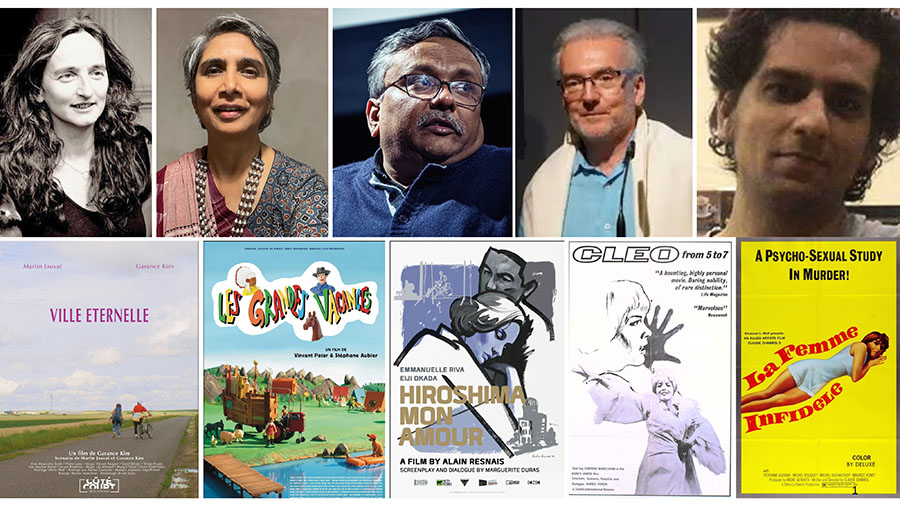
Curated by filmmaker Sharad Raj, the French Classic Cinema showcase celebrates filmmakers whose artistic innovations have fundamentally shaped world cinema. The selection brings together four extraordinary voices: Alain Resnais, Agnès Varda, Marguerite Duras and Claude Chabrol.
Marguerite Duras's India Song is an immersive exploration of memory, desire and colonial histories, its unconventional relationship between image and sound challenging traditional storytelling. Alain Resnais's Hiroshima mon amour remains a landmark in cinematic language, weaving personal memory and the collective trauma of Hiroshima into a profound meditation on love and loss.
Agnès Varda's Cléo from 5 to 7 follows a woman confronting uncertainty over two hours, transforming an apparently ordinary afternoon into a compelling exploration of identity, mortality and the female gaze. Claude Chabrol's The Unfaithful Wife exposes the unsettling tensions beneath domestic normalcy through his signature psychological storytelling.
The programme also embraces French filmmaking through five short films: Montsouris Park, Ville éternelle, L'attente, No Good Deed and Les Grandes Vacances. Together, these selections connect the radical spirit of French cinematic history with the creative voices shaping its present.
Julie Bertuccelli: A Special Presence
A major highlight is the presence of French filmmaker Julie Bertuccelli, whose career spans fiction, documentary and influential cultural institutions.
After studying philosophy, Bertuccelli began as an assistant director, working with celebrated filmmakers including Otar Iosseliani, Krzysztof Kieślowski, Bertrand Tavernier and Rithy Panh. Her debut feature, Since Otar Left (2002), won the Grand Prix at Cannes Critics' Week and the César for Best First Film.
Her subsequent films include The Tree, School of Babel, Last News from the Cosmos and Claire Darling, starring Catherine Deneuve. Her documentary Jane Campion: The Cinema Woman was presented in the Cannes Classics selection. Her latest documentary, The Violin Lesson (2026), continues her exploration of human stories and the transformative power of art.
Bertuccelli is also founder and President of the Cinémathèque du documentaire, former President of SCAM and co-President of ARP. She helped establish the Cannes Film Festival's documentary award, the Œil d'Or, and served as Co-Director of the Directing Department at La Fémis, France's national film school.
WIFF audiences will experience two of her films: Since Otar Left, followed by a conversation moderated by Sandra de Castro Buffington, and the India premiere of The Violin Lesson.
Rethinking The Big Screen: Who Gets To Watch?
Perhaps the most provocative component of the programme is the panel, Rethinking the Big Screen: Museums, Cinematheques, Mobile Theatres and Other Alternative Non-Traditional Community Theatres.
At a time when streaming platforms are transforming viewing habits and commercial considerations increasingly dictate theatrical exhibition, independent cinema faces a fundamental challenge: where can films that fall outside mainstream distribution find their audiences?
Can museums become active spaces for film culture? Can cinematheques evolve into living centres of public engagement? Can mobile theatres take cinema to communities without access to conventional screens? And can neighbourhoods build their own sustainable spaces for collective film viewing?
The discussion brings together four distinguished voices.
Meenakshi Shedde, international film curator, National Award-winning critic and journalist, has spent four decades championing South Asian cinema at festivals including Cannes, Toronto, Berlin, Venice and Sundance. Her work foregrounding Dalit and Indigenous/Adivasi cinema has opened international platforms to marginalised voices. Her championing of Naga filmmaker Theja Rio's Angh, which won Toronto Film Festival's Platform Competition in 2026, exemplifies the importance of curatorial intervention.
Julie Bertuccelli brings the perspective of a filmmaker and institution-builder, with her experience leading the Cinémathèque du documentaire and strengthening documentary culture and access.
Devdutt Trivedi, Lecturer at Whistling Woods International, film programmer and curator, brings experience from both cinema and contemporary art. Having managed Mumbai's Project 88 art gallery, he works across film appreciation, programming, exhibition and critical thinking.
Mathieu Béjot, Audiovisual Attaché at the French Institute in India, brings an international perspective on audiovisual culture. He previously headed Sunny Side of the Doc and TV France International (2000–2018), with extensive experience in international film markets, audiovisual exports and cultural engagement.
Moderated by Sharad Raj, the panel promises to move beyond the familiar debate about the decline of theatrical exhibition towards a more urgent question: how do we create new spaces where cinema can remain accessible, adventurous and connected to communities?
Building Communities Around Cinema
The conversation is particularly relevant to WIFF's own philosophy. Independent cinema needs more than filmmakers and films. It needs audiences, adventurous curators, supportive institutions and sustainable exhibition spaces.
Rooted in the creative neighbourhood of Aram Nagar, Versova, WIFF has been building an ecosystem that brings filmmakers, writers, artists, producers and audiences together. Its intimate, community-oriented venues offer an alternative to the impersonal scale of mainstream exhibition.
The French programme extends this vision, connecting the history of cinematic experimentation with contemporary questions about cultural access, preservation and the democratisation of film.
The French Cinema Programme: Dates and Venues
December 1 | 4–7 PM | Third Bell Studio 1
- India Song – Marguerite Duras (120 mins)
December 3 | 4–7 PM | Silk Road Coffee Experience Center
- Montsouris Park – Guil Sela (14 mins)
- The Unfaithful Wife – Claude Chabrol (98 mins)
December 4 | 1–4 PM | Third Bell Studio 1
- Since Otar Left – Julie Bertuccelli (103 mins)
- Post-screening conversation with Julie Bertuccelli, moderated by Sandra de Castro Buffington.
December 4 | 4–7 PM | Third Bell Studio 1
- India premiere: The Violin Lesson – Julie Bertuccelli (85 mins)
- Panel: Rethinking the Big Screen (45 mins).
December 5 | 1–4 PM | Silk Road Coffee Experience Center
- Hiroshima mon amour – Alain Resnais (90 mins)
- Cléo from 5 to 7 – Agnès Varda (90 mins)
December 5 | 4–7 PM | Silk Road Coffee Experience Center
- Ville éternelle – Garance Kim (20 mins)
- L'attente – Alice Douard (30 mins)
- No Good Deed – Sohail A. Hassan (24 mins)
- Les Grandes Vacances – Stéphane Aubier and Vincent Patar (26 mins)